A discharge lamp is a type of light source that generates light by passing an electric current through a gas or a mixture of gases. When the gas is energized by the electric current, it produces visible or ultraviolet light through a process called gas discharge.
Construction of a Discharge Lamp
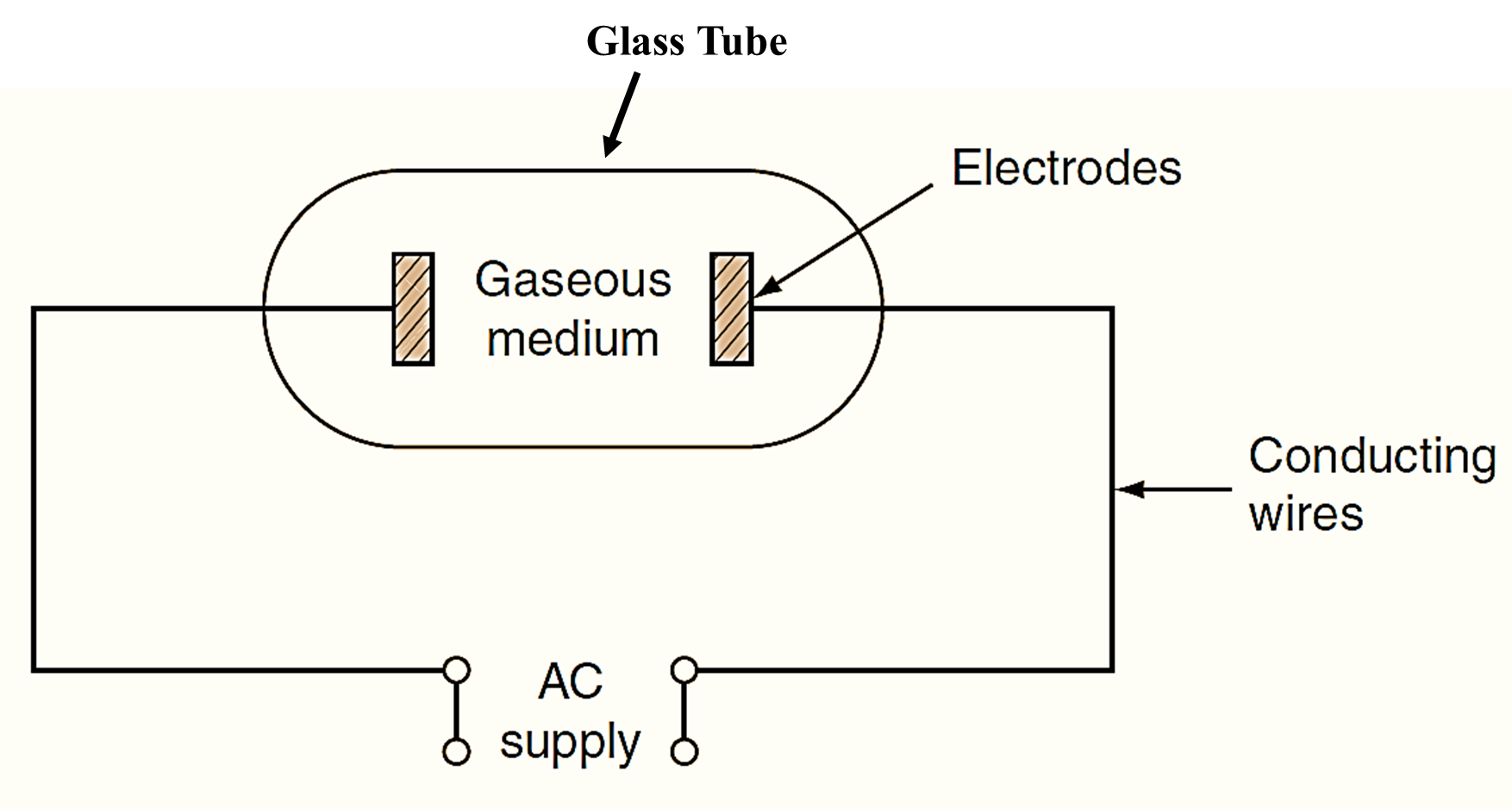
A discharge lamp consists of the following key components:
- Glass Tube (Envelope): A sealed glass enclosure that contains the gas or vapor medium. It is designed to withstand high temperatures and pressure. It may be coated internally with phosphors to enhance light emission (e.g., in fluorescent lamps).
- Electrodes: Two electrodes, typically made of conductive materials, are placed at opposite ends of the tube. These electrodes act as an anode and cathode to facilitate the flow of electric current.
- Gaseous or Vapor Medium: The tube is filled with a specific gas or vapor, such as neon, argon, mercury vapor, or sodium vapor. The type of gas determines the light’s color and intensity.
- Conducting Wires: External conducting wires connect the electrodes to an external power source (AC or DC supply).
- Starter (Optional): It is used in some discharge lamps (e.g., fluorescent lamps) to generate an initial high voltage required to ionize the gas.
- Ballast: A current-regulating device connected to the lamp circuit. It prevents excessive current flow and ensures stable operation.
- Additional Components: Some discharge lamps include reflectors to direct light output and compact designs may include integrated electronic circuits for efficient operation.
Working of Discharge Lamp
A discharge lamp operates on the principle of gas discharge, where an electric current passes through a gas or vapor, exciting the gas atoms and producing light. Below is a detailed explanation of its working:
1. Starting the Lamp: When the lamp is connected to an AC supply and the switch is turned on:
- The starter briefly allows current to flow through a heating circuit.
- This current heats the electrodes, causing them to emit electrons (a process called thermionic emission).
2. Ionization of Gas: The emitted electrons collide with the gas atoms inside the tube, knocking electrons out of their orbits and creating positive ions. This ionization of the gas reduces its electrical resistance, allowing more current to pass through.
3. Discharge and Light Emission: As the ionized gas conducts electricity, the electrons and ions recombine, releasing energy in the form of light and ultraviolet (UV) radiation. The type of light emitted depends on the gas used:
- Mercury vapor: Emits UV radiation, which is converted to visible light by a phosphor coating on the inner surface of the tube.
- Neon gas: Produces a characteristic orange-red glow.
- Sodium vapor: Emits a bright yellow light.
4. Role of the Choke: The choke (or ballast) limits the current flowing through the lamp, preventing it from rising to dangerously high levels. It also provides the necessary voltage to strike an arc between the electrodes during the starting process.
5. Stable Operation: Once the discharge starts, the lamp operates stably, producing light continuously as long as the power supply is maintained.
Types of Discharge Lamps
| Type | Examples | Gas/Vapor Used | Pressure | Key Features | Applications |
|---|---|---|---|---|---|
| Low-Pressure Discharge Lamps | Fluorescent Lamps, Low-Pressure Sodium Lamps | Mercury vapor, Sodium vapor | Low pressure | High efficiency, soft light | Indoor lighting, offices, homes |
| High-Pressure Discharge Lamps | Mercury Vapor, Metal Halide, High-Pressure Sodium Lamps | Mercury, Sodium, Halides | High pressure | Bright light output, high intensity | Streetlights, stadiums, industrial areas |
| Neon Lamps | Neon Signs, Indicator Lamps | Neon gas | Low pressure | Vibrant colors, decorative purposes | Advertising, decorative lighting |
| Cold Cathode Lamps | Cold Cathode Fluorescent Lamps (CCFL) | Argon, Neon, Mercury | Low pressure | Thin, long lifespan, low power | LCD backlighting, signage |
| Xenon Lamps | Xenon Arc Lamps | Xenon gas | High pressure | Extremely bright, UV and visible light | Projectors, searchlights, medical devices |
| Induction Lamps | Electrodeless Fluorescent Lamps | Mercury vapor | Low pressure | Long lifespan, low maintenance | Streetlights, tunnels, industrial lighting |
| Plasma Lamps | Plasma Globes | Argon or Helium | Low pressure | Decorative, glowing plasma effect | Entertainment, novelty lighting |
Advantages of Discharge Lamps
- Energy Efficiency: Consumes less energy compared to incandescent lamps.
- Long Lifespan: Durable and cost-effective in the long run.
- Bright Light Output: Produces intense and uniform illumination.
- Variety of Colors: The ability to emit different colors based on the gas used.
- Wide Applications: Suitable for residential, commercial, and industrial purposes.
Disadvantages of Discharge Lamps
- High Initial Cost: Requires additional components like ballast and starter.
- Complex Circuitry: Needs proper installation and maintenance.
- Startup Time: Some types, like high-pressure lamps, take time to reach full brightness.
- Contains Hazardous Materials: Many discharge lamps contain mercury, posing environmental risks if not disposed of properly.
- Requires External Ballast: Adds to the overall cost and complexity.
Applications of Discharge Lamps
- Residential Lighting: Compact fluorescent lamps (CFLs) are widely used in homes.
- Street and Highway Lighting: Sodium vapor and mercury vapor lamps are preferred for their brightness.
- Industrial and Commercial Spaces: High-intensity discharge (HID) lamps are used in factories and warehouses.
- Advertising and Signage: Neon lamps and cold cathode lamps are commonly used in signage.
- Automotive Lighting: HID lamps are used in vehicle headlights.
- Medical and Scientific Equipment: Discharge lamps like xenon lamps are used in projectors and medical devices.