An Expulsion Type Lightning Arrester is a protective electrical device used in power distribution and transmission systems to safeguard equipment from high voltage surges caused by lightning strokes and switching operations. It is commonly installed on distribution lines up to 33 kV voltage level. The arrester works on the principle of spark-over and arc extinction by gas expulsion. The generated arc is cooled and extinguished by hot gases expelled at high pressure through a vent channel.
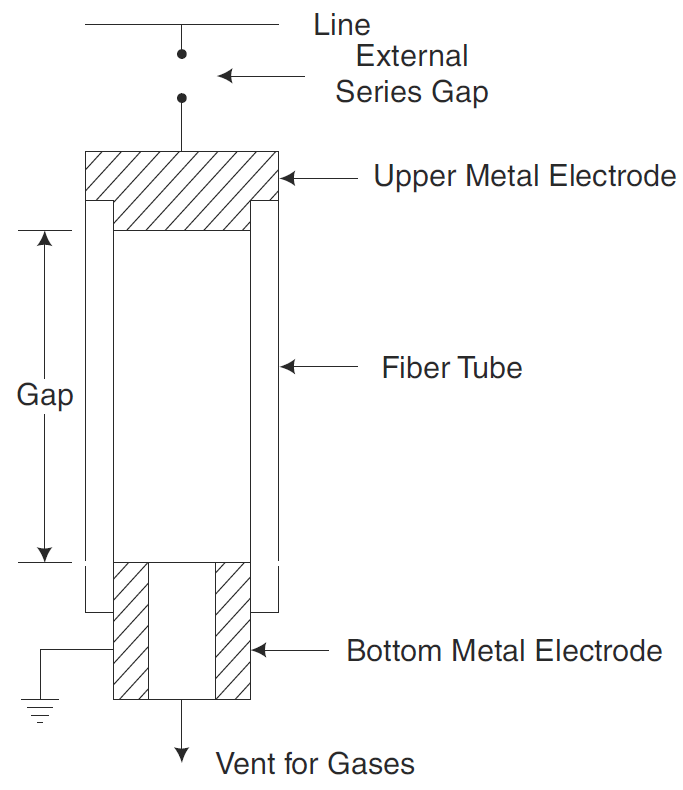
Fig 1: Expulsion Type Lightning Arrester Construction
Need for Lightning Arresters
Lightning surges may reach several hundred kilovolts and can damage insulators, transformers, and switchgear. Hence, arresters are installed to provide a low-resistance path for surge currents to discharge safely to earth.
Definition
Expulsion Type Lightning Arrester is a surge protection device that consists of an external spark gap in series with an internal explosion chamber (fiber tube) which extinguishes the arc by expelling hot gases. The surge current flows to earth until the voltage drops to normal operating level.
Construction of Expulsion Type Lightning Arrester
The major constructional components of an expulsion type lightning arrester are:
- External Series Gap – First layer of protection used to break down during surge voltage.
- Upper Metal Electrode – Connected to the line conductor.
- Fiber Tube (Insulating Tube) – A special arc-quenching insulating tube made of fiber-glass material.
- Bottom Metal Electrode – Connected to the earthing system.
- Vent for Gases – Allows hot gases to escape and extinguish the arc.
- Ground Terminal – Provides a conducting path for discharge to earth.
Working Principle of Expulsion Type Lightning Arrester
Under normal operating conditions, the arrester remains inactive and acts as an insulator. When a high surge voltage exceeds the spark-over voltage, breakdown occurs across the external gap. The surge current passes through the fiber tube where the internal arc is formed. The heat generated vaporizes the fiber material and creates high-pressure gas which blows out through the vent. The expelled gases cool and stretch the arc, ultimately extinguishing it when system voltage falls back to normal. The arrester then returns to its original insulating state.
Step-by-Step Working of Expulsion Type Lightning Arrester
- Lightning strikes the power line causing a high surge voltage.
- The surge voltage breaks the external series gap.
- An arc is formed inside the fiber tube between the electrodes.
- Heat decomposes the fiber material producing gases.
- Gas pressure forces the arc outward through the vent.
- The arc stretches and is extinguished completely.
- Normal operating condition resumes with no follow current.
Types of Expulsion Type Lightning Arresters
| Type | Construction Features | Application |
|---|---|---|
| Primary Expulsion Arrester | Single vented tube mounted between line and ground | Distribution transformers, rural feeders |
| Secondary Expulsion Arrester | Used with other coordinated surge devices | Indoor substations and control panels |
| Low-voltage Expulsion Arrester | Simple construction, no external gap required | LV side of distribution transformers |
Advantages of Expulsion Type Lightning Arrester
- Simple construction and easy to install.
- Low cost compared to valve and metal-oxide arresters.
- Instantaneous response to surge voltage.
- Self-restoring capability without replacing components.
- Suitable for outdoor distribution networks.
Disadvantages of Expulsion Type Lightning Arrester
- Produces loud noise during expulsion of gases.
- Cannot be used at voltages above 66 kV.
- High maintenance for fiber tube replacement.
- May cause radio interference due to arc formation.
- Arc gases may be hazardous in closed installations.
Applications of Expulsion Type Lightning Arrester
- Distribution transformers (11 kV, 22 kV, 33 kV)
- Rural overhead distribution lines
- Outdoor substations and pole-mounted switchgear
- Capacitor banks and reactor protection
- Protection of railway traction power systems
Conclusion
The Expulsion Type Lightning Arrester is widely used in medium-voltage power distribution due to its low cost, high surge handling capacity, and self-restoring performance. Although replaced by modern Zinc-Oxide (MOV) type arresters in high voltage systems, it remains the best economical choice for 11–33 kV overhead networks.